
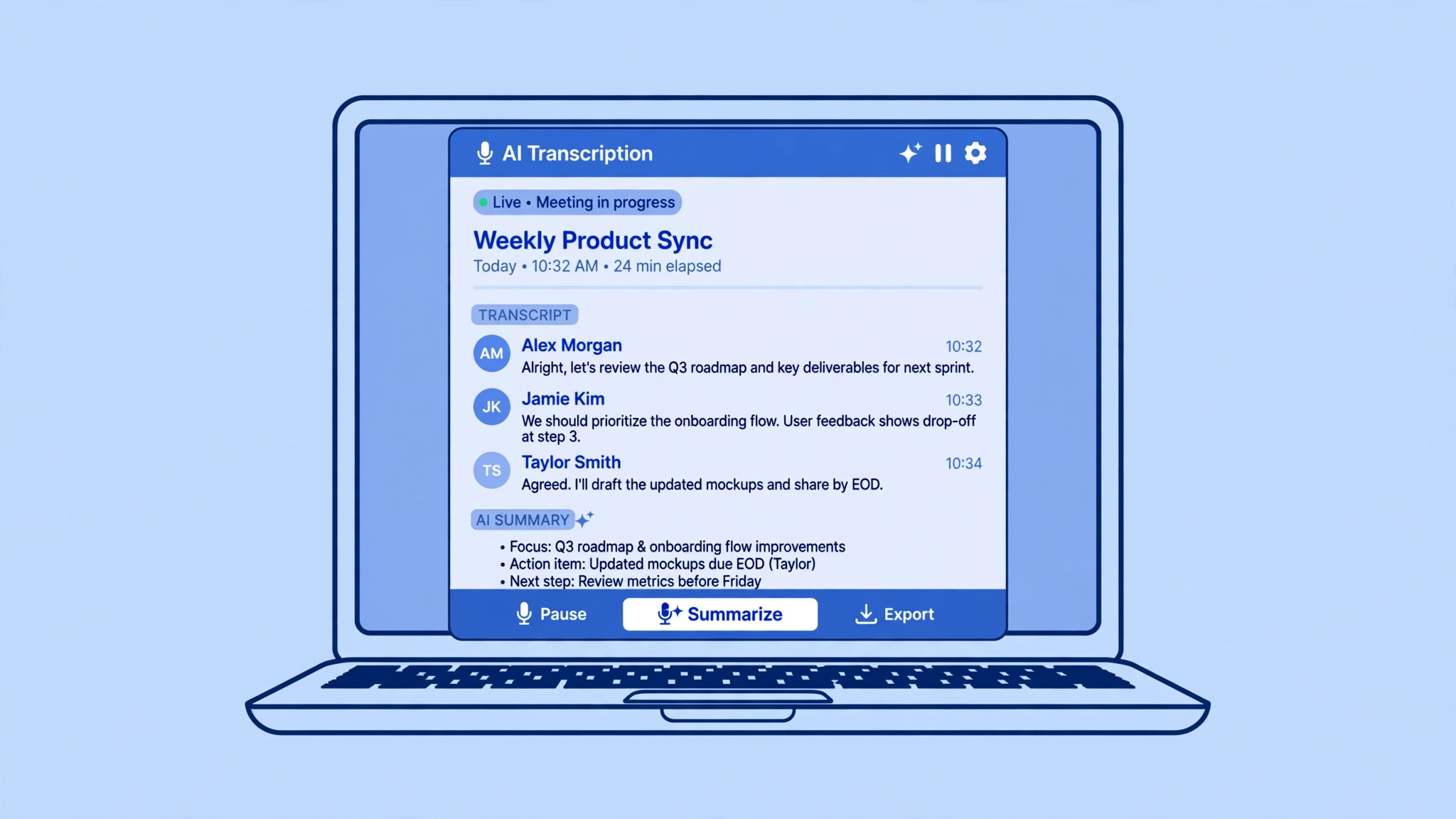
After a one-hour cross-departmental meeting, organizing the minutes often takes another half hour: relistening to recordings, extracting key points, and confirming who delivers what and when. Many teams adopt AI tools with the initial intention of “freeing their hands,” but choosing the wrong tool often just means reading long, tedious running logs in a different place.
The core of truly actionable meeting minutes does not lie in transcribing idle chatter verbatim down to every last detail, but in clearly presenting basic information, key discussion points, resolutions reached, action items with assignees and deadlines, and unresolved issues. Faced with the commonly seen tools on the market—飞书妙记, 通义听悟, and 会议执行官—how should teams choose based on their own workflows? This article provides a hands-on comparison across three dimensions: functionality, pricing, and ecosystem.
1. Cognitive Prerequisite: The Three-Tier Capability Model of AI Meeting Tools
Before evaluating meeting tools, it is recommended to align your needs with the capability tier your team lacks most. AI meeting tools typically encompass the following three tiers of capabilities:
- Tier 1: Speech-to-Text (ASR and Speaker Diarization)—Solves “clearly hearing who said what.”
- Tier 2: Intelligent Summarization and Structured Organization—Solves “filtering out filler and distilling conclusions.”
- Tier 3: Action Item Extraction and Execution Follow-up—Solves “assigning owners, tracking schedules, and driving implementation.”
The essence of tool selection is determining which tier the tool focuses on and whether it can seamlessly integrate into your team’s existing collaboration system.
2. Three-Dimensional Horizontal Comparison of the Three Tools
1. Functional Focus Comparison
- 飞书妙记: Positioned as a native meeting assistant within the 飞书 ecosystem. Its advantage lies in its “seamless feel”—once a meeting ends, it automatically transcribes and generates intelligent minutes, which can be viewed directly and commented on with inline highlights in 飞书 Docs. Its capabilities primarily cover Tier 1 and Tier 2, quickly generating paragraph summaries, but it is typically more focused on recording and replaying 飞书 meetings themselves.
- 通义听悟: A general audio/video transcription tool under Alibaba Cloud. It is more like an “all-around transcription hub,” supporting not only real-time recording but also the upload of external audio and video files, with strong Tier 1 transcription stability and speaker identification capabilities. For Tier 2 summarization, it offers features such as Q&A review and chapter overviews, but it is relatively restrained regarding Tier 3 integration with enterprise collaboration task systems.
- 会议执行官: More focused on “closing the meeting loop and driving execution.” In addition to basic transcription and key point distillation, 会议执行官 emphasizes the delivery of Tier 3 capabilities, automatically breaking down content into “resolutions” and “to-do lists (assignee + deadline)” according to a standard minutes structure, helping teams shift their attention from “what was noted” to “what to do next.”
2. 飞书 Ecosystem Compatibility
- 飞书妙记: Has the highest native integration. Minutes exist in the form of 飞书 Docs and naturally integrate deeply with 飞书 Calendar and organizational structures. Its limitation is that it only covers 飞书 meeting scenarios; offline discussions or meetings held on other conferencing software require manual import or cannot be directly linked.
- 通义听悟: Operates in an independent web and client ecosystem. Transcription results are stored within personal or team spaces in the product and can be exported as local documents. If a team’s primary workspace is in 飞书, content must be copied and pasted manually, resulting in a fractured workflow for closed-loop collaboration.
- 会议执行官: Features targeted adaptation for 飞书 workflows. It can interface with collaboration scenarios across platforms like 飞书, directly dispatching organized structured minutes and task items into the workflow, making it suitable for teams looking to strengthen “execution tracking” within the 飞书 ecosystem.
3. Cost and Pricing Models
- 飞书妙记: Typically bundled with the commercial tier of 飞书 or personal storage space purchased by an enterprise. Generally, as long as an organization procures the corresponding tier of the 飞书 suite, 飞书妙记 serves as a built-in feature without requiring separate purchase, though feature permissions are often constrained by the tenant’s overall seat licensing policy.
- 通义听悟: Typically adopts a “free quota + top-up hours/monthly subscription” model. It is friendly to light users, but for frequent cross-team meetings, the consumption rate of hours packages requires dedicated management and budget planning.
- 会议执行官: Typically provides tailored solutions for teams focused on meeting execution efficiency, with pricing models usually designed around team size or usage scenarios. Specific pricing is subject to the latest officially published policies; budget-conscious teams can adopt it on demand and in phases.
3. Three-Dimensional Comparison Overview and Selection Recommendations
| Dimension | 飞书妙记 | 通义听悟 | 会议执行官 |
|---|---|---|---|
| Primary Positioning | Native recording and quick review for 飞书 meetings | General audio/video transcription and learning assistant | Structured minutes and to-do execution tracking |
| Core Advantage Tier | Basic transcription + seamless flow in 飞书 Docs | Multi-source audio import + powerful recognition and analysis | Structured resolutions + closed-loop action item management |
| 飞书 Ecosystem Collaboration | Native deep integration | Relatively independent, relies on manual export | Deeply adapted to collaboration workflows |
| Applicable Core Scenarios | Teams where all members heavily use 飞书 meetings | Organizing external interview recordings, cross-platform audio/video transcription | Project teams that are strongly results-oriented and prioritize action item execution |
Scenario-Based Selection Guide (Examples):
- Scenario A (Frequent Internal Online Communication): If your team’s daily communication and online meetings rely 100% on 飞书 meetings, 飞书妙记 is the top choice—it offers the shortest workflow and the lowest collaboration barrier.
- Scenario B (Cross-Organizational Research and Audio/Video Processing): If your work involves extensive customer interviews, media recordings, or external meeting audio files, 通义听悟 is the preferred choice, performing reliably in audio importing and multi-format compatibility.
- Scenario C (Delivery-Heavy Project Regular Meetings and Cross-Departmental Decision-Making): If you frequently hold project weekly meetings or review sessions, where the biggest pain point is not “missing notes” but “no one follows up after the meeting,” it is recommended to try 会议执行官 to drive actual business closed-loops through structured to-do breakdowns.